
What you should know about Swimmer’s Itch
What is it?
Swimmer’s itch (cercarial dermatitis) is a skin irritation caused by a larval form of certain flatworms from the family Schistosomatidae.
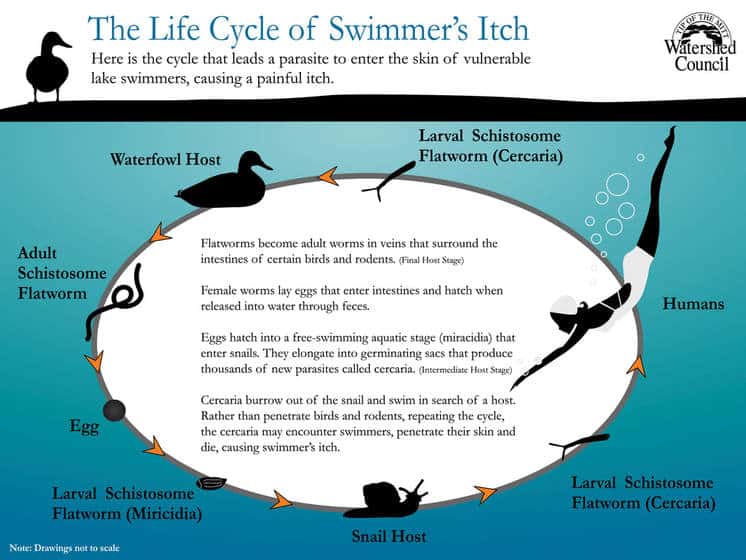
Schistosome flatworms are parasites with a complex life cycle usually involving certain species of snails and waterfowl. Upon hatching, free swimming Schistosomatidae larvae seek out an intermediary host, usually snails, to continue the life cycle. The skin condition occurs when larvae mistakenly burrow into human skin. The larvae, known as cercariae, are only 1/32 of an inch long and generally invisible to the naked eye. Since humans are not the proper host, the larvae soon die upon burrowing into the skin. The itching sensation is caused by an immune response to the dead larvae under the skin and responses vary by person.
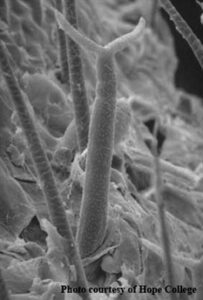 Many species of parasitic flatworms are naturally occurring in most lakes. However, not all larval species cause swimmer’s itch. The life cycle and host requirements of those species responsible for swimmer’s itch differ widely, and the natural history of most is poorly understood. In North America, at least 30 states and parts of Canada have documented the skin condition. In the United States, the problem appears to be concentrated in the most northern tier of states.
Where does it come from?
The life cycle of the flatworm involves two very specific hosts. Each flatworm often uses just one species of snail and one kind of waterfowl as intermediate and definitive hosts to complete its life cycle. Both must be present in the same lake for the life cycle to be completed.
What are the symptoms?
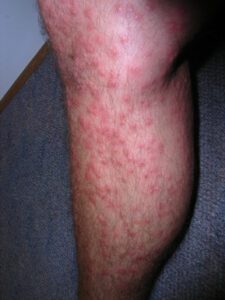 Not all people are sensitive to swimmer’s itch. Some who are exposed to the larvae never develop the itch. Those who are sensitive may feel a dull, prickly sensation as the larvae burrow into the skin. This may occur either while swimming or immediately after leaving the water. At each point of entry a small red spot may appear and begin to itch.
Symptoms include intermittent periods of itching that will continue for several days. Many suffering from swimmer’s itch experience the most severe itching early in the morning. Usually the reddened areas reach their largest size after approximately 24 hours. The itchy, reddened, and raised areas are sometimes confused with bites from chiggers or mosquitoes and the symptoms may be misdiagnosed as those resulting from poison ivy or stinging nettles. Chigger bites are usually located at points where clothing contacts the skin such as wrists, waist, ankles, etc. For swimmer’s itch, itching is limited to points of cercarial entry and will not spread or develop into water blisters.
Swimmer’s itch, although extremely annoying and uncomfortable, is not a communicable or fatal condition. Over-the-counter drugs are available to reduce the symptoms of swimmer’s itch. Antihistamines can be used to help relieve the itching while topical steroid creams may help to reduce the swelling. Before taking any of these drugs, however, consult your physician or dermatologist for advice.
Preventing Swimmer’s Itch
There are several means by which you can significantly reduce your chances of contracting the swimmer’s itch parasite.
- Since itch-causing larvae usually live in the shallows near the shore, it is best to avoid these areas as much as possible. This is especially important when the wind is blowing toward the shore.
- Towel off thoroughly as soon as you leave the water and at frequent intervals. The fragile cercaria of some species can sometimes be rubbed off before they fully penetrate the skin.
- Do not feed waterfowl! Feeding waterfowl may aggravate the problem by concentrating potential hosts in a limited area.
- Maintain a healthy greenbelt along your shoreline property with a variety of native plants (including trees, shrubs, and herbaceous plants) to prevent waterfowl from congregating on your property. Shading of near shore areas as a result of a shoreline greenbelt will also help reduce the amount of bottom-dwelling algae growth, which is a primary food source for the type of snails that are commonly hosts in the schistosome cycle.
Playlist
55:19

4:05
This is video #7 in the “Protecting What You Love” video series produced by Tip of the Mitt Watershed Council. The video focuses on the link between feeding waterfowl and swimmer’s itch.
Funding for this project provided by:
Charlevoix County Community Foundation
Petoskey-Harbor Springs Area Community Foundation
Crouse Entertainment Group
Playlist

49:31
55:19

31:25
